Apple has launched its sleep apnoea detection feature in Australia following approval from the Therapeutic Goods Administration, targeting a condition that affects more than one million Australians with 80% remaining undiagnosed.
The feature is available on Apple Watch Series 9 (from $649), Series 10 (from $699), and Ultra 2 (from $1,299) models through the latest software update.
The technology has received endorsement from sleep specialists and medical professionals who view it as a significant step toward addressing widespread under-diagnosis of sleep apnoea.
Moira Junge, CEO of Sleep Health Foundation, described the development as “a welcome and significant step towards healthier sleep,” given that obstructive sleep apnoea often goes undetected despite potentially serious health consequences.
“Obstructive sleep apnoea is a common and serious sleep disorder, potentially impacting a million Australians,” Junge said.
“As it often goes undiagnosed, awareness and early detection of sleep apnoea is a welcome and significant step towards healthier sleep, and improved lives.”
The Apple Watch uses its accelerometer to monitor small wrist movements associated with breathing interruptions during sleep, measuring a new metric called “breathing disturbances.”
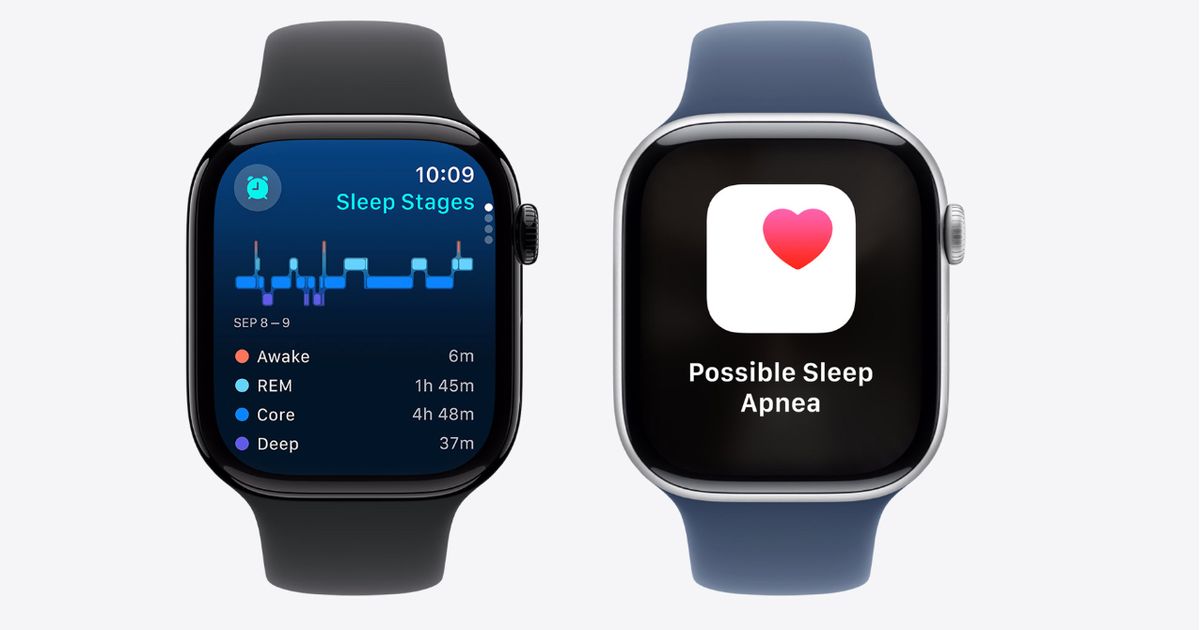
The algorithm analyses data over 30-day periods and notifies users if patterns suggest moderate to severe sleep apnoea, prompting them to consult healthcare providers for potential diagnosis and treatment.
Apple’s sleep apnoea notification algorithm was developed using machine learning and clinical-grade sleep apnoea tests, with the design phase incorporating 3,936 nights of recordings from 2,160 participants.
The company conducted what it describes as an “unprecedented” clinical validation study for sleep apnoea technology, confirming that every participant identified by the algorithm had at least mild sleep apnoea.
Dr. Sumbul Desai, Apple’s vice-president of health, emphasised the broader health implications of untreated sleep apnoea, including increased risk of hypertension, type 2 diabetes, and cardiac issues.
The condition affects over one billion people worldwide and can cause excessive daytime tiredness, concentration difficulties, and increased irritability.
ASX-listed sleep apnoea specialist ResMed has welcomed Apple’s entry into sleep disorder detection, with chief medical officer Carlos Nunez stating that smartwatches will play an increasing role in raising awareness and “helping to save lives.”
The company views technology expansion as complementary to its treatment solutions rather than competitive.
Samsung has also received TGA approval for its own sleep apnoea detector available on Galaxy Watch models, with Australian head of wearables Kylie Mason highlighting additional coaching features that provide environmental monitoring and sleep improvement recommendations.
The Galaxy Watch range starts from $549 for the Watch7.
The health wearables market represents significant growth potential, valued at approximately $107.7 billion globally according to MarketsandMarkets, with projections reaching $234 billion by 2029.
Apple’s expansion into clinical-grade health monitoring follows its recent launch of hearing test capabilities using AirPods Pro 2 ($399), which can function as hearing aids.
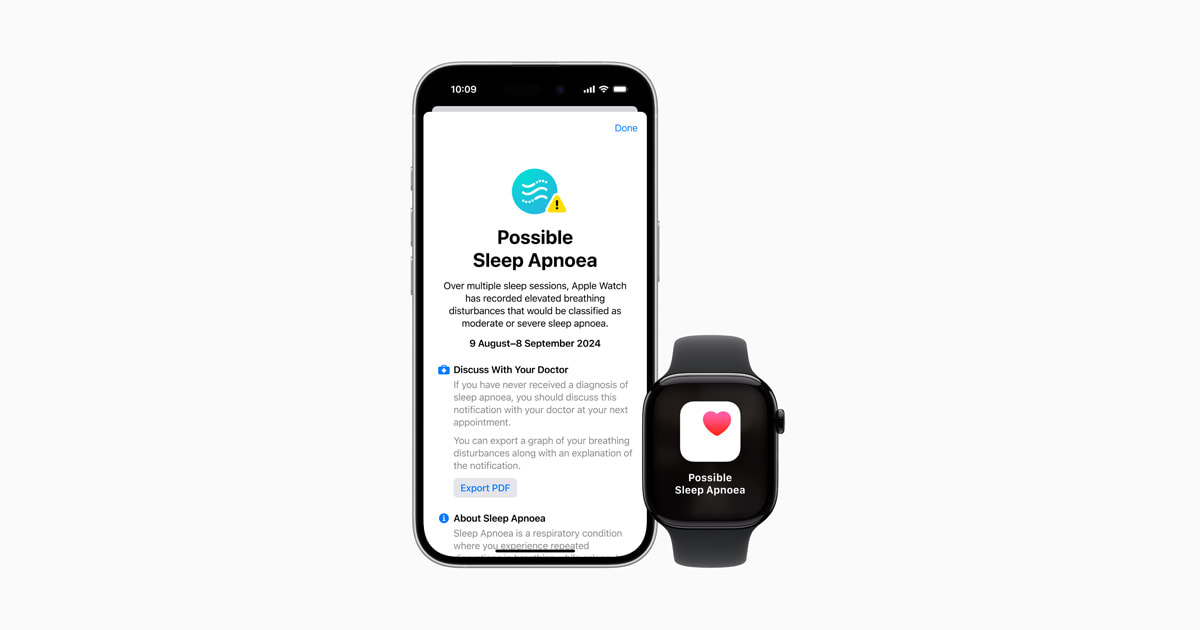
Users can view their nightly breathing disturbance data through the iPhone and iPad Health app, with classifications showing elevated or normal patterns over one-month, six-month, or yearly periods.
When potential sleep apnoea is detected, notifications include educational materials and a PDF report containing three months of data for healthcare provider consultations.
The technology launch addresses a critical gap in Australian healthcare, where sleep apnoea diagnosis typically requires expensive overnight studies in specialised clinics.
By making initial screening more accessible through consumer devices, the Apple Watch feature could significantly increase early detection rates and reduce long-term health complications associated with untreated sleep disorders.
However, the feature serves as a screening tool rather than a diagnostic device, with users still requiring professional medical evaluation and testing for confirmed diagnosis and treatment planning.
The integration of consumer technology with clinical health monitoring represents a growing trend toward preventive healthcare through accessible digital solutions.