The launch next month of the Heos wireless sound system by Japanese sound Company Denon, unfolds another chapter in the history of a small Australian start-up Company that was initially funded by the Australian Federal Government and local investor’s, then purchased by Cisco.
The Company which started off in Pyrmont, NSW was called Avega, they led the world in the development of wireless sound technology, this week it was revealed that the original Avega team, are the technology architects behind the new Denon Heos wireless sound system, which takes wireless audio and the management of audio content to a whole new level.
I met the Avega team, two years before the launch of the Sonos wireless sound system, then at the 2009 CES show I was shown high end wireless sound speakers that delivered high quality audio output via a mesh network.
While Sonos got the early jump on the work being done by Avega they are now going to have to compete with a group that appears to have taken wireless audio and the management of content to a whole new level.
The new Heos wireless sound system has been developed from the ground up by a 100 year old Japanese sound Company, Denon and a technology team that for the last four years have been working from a secret North Sydney lab to deliver a new generation wireless sound system that delivers a lot more capability than what Sonos delivers today.
The CEO of Avega was Peter Celinski a Polish immigrant, today he is the Chief Technology Officer for the D+M Group the owners of the Denon, Marantz and Boston Audio brands.
Working with sound engineers in Japan Celinski and his team have delivered a wireless sound system that will go on sale next month at 20 specialist dealers in Australia.
The combination of cutting edge software, superior sound engineering and new connectivity options is set to make the Heos a much sought after sound system.
The Heos range includes three wireless multi-zone music players (from RRP $449 to $899), as well as a wireless integrated amplifier (RRP $799) and wireless pre-amplifier (RRP $549). An optional access point range extender will also be available to improve or expand an existing home wireless network (sold separately, RRP $159).

Click to enlarge |
Configuring the Denon Heos speakers out of the box is simple Instead of using a wireless or USB connection, you configure the speaker with a 3.5mm cable.
The top end Heos 7 is a big speaker weighing in at 4 Kilo. It looks slightly trapezoidal from the front but when one looks at it from other angles you will see that it is a symmetrical stylish teardrop shape.
The back of the speaker, below the cloth grille, is where you find the Power, USB, 3.5mm, and Ethernet ports, plus Connect and Reset buttons which is where the difference starts to be noticed between what Sonos is currently delivering and what the Heos system will deliver.
The Heos 7 has two mid-woofers, two tweeters, and an active subwoofer, each of which is powered by its own Class D amplifier. Unlike the Sonos setup there appears to be no need to buy a separate sub.
My first interaction with the Heos sound system was when I was played a Queen track a band who are playing in Sydney next week.
The sound was crisp and clear and due to the use of an active subwoofer driver, the Heos 7 was able to pump out excellent sound devoid of any distortion or lag.
Synchronisation was instant which is where the Heos 7 has an advantage over any other wireless sound system.
According to Celinski there is no lag with the Heos speakers.
While we did not do a full review what we did hear was impressive.
Content is managed via a new Heos app that has been written and developed in Sydney.
The software is stunning. It is easy to use, clear and beautifully designed to deliver simple functionality.
At the bottom of the opening interface are three location buttons Rooms, Music and Now Playing.
The Rooms tab allows you to see all the speakers on your network (and what they’re playing). You can also rename them for easier differentiation or group them together.
Another standout feature is a pinch function that allows one to group or ungroup speakers by squeezing the screen of a tablet or smartphone.
The “Pinch to Play” feature allows you to perform a pinch gesture on the screen to include up to eight speakers.
You can add music to your music queue from any sources by simply selecting them and choosing where you want the track to be placed in the queue – you can choose to Play Next, Add to the End or clear the queue completely using Play Now & Replace.
Streaming services available at launch will include TuneIn Radio, Spotify, Pandora, Deezer, Napster and Rhapsody, with quarterly software updates expected to add new services every three months.
You are also able customise which of these services show in the Music tab so you see only those services you use.
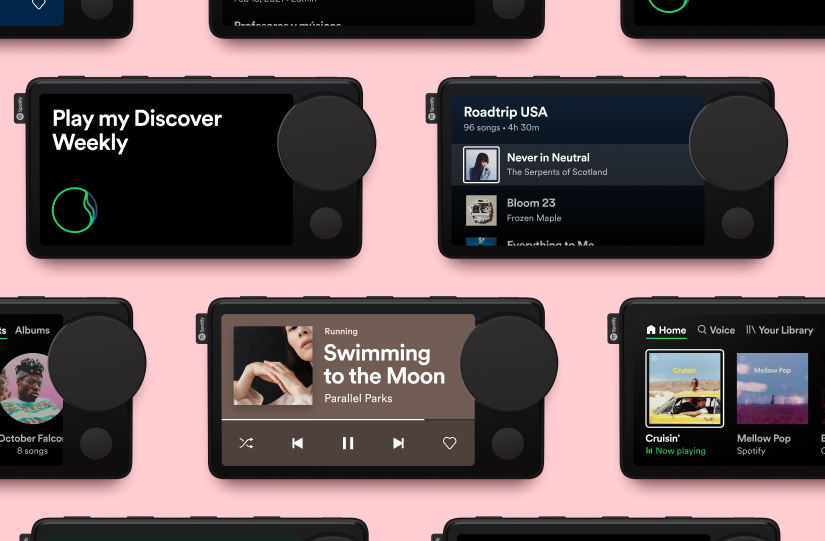
A noticeable difference for Spotify users on HEOS compared to Sonos is that HEOS uses Spotify Connect, so you’ll get the full Spotify experience that you’ll be used to, including radio stations, curated playlists and recommended music.
After the Heos speakers have been set up, they will automatically appear in Spotify, Rhapsody, TuneIn, and Pandora apps, letting you play music through those services just as if they were AirPlay or Bluetooth speakers.
Room groupings and stereo pairs also show up in the apps in the same way, so you don’t have to worry about diving into the Heos app every time you want to play music in a different room.
Shortly we will bring you a full review of the Denon Heos wireless sound system.

Click to enlarge |